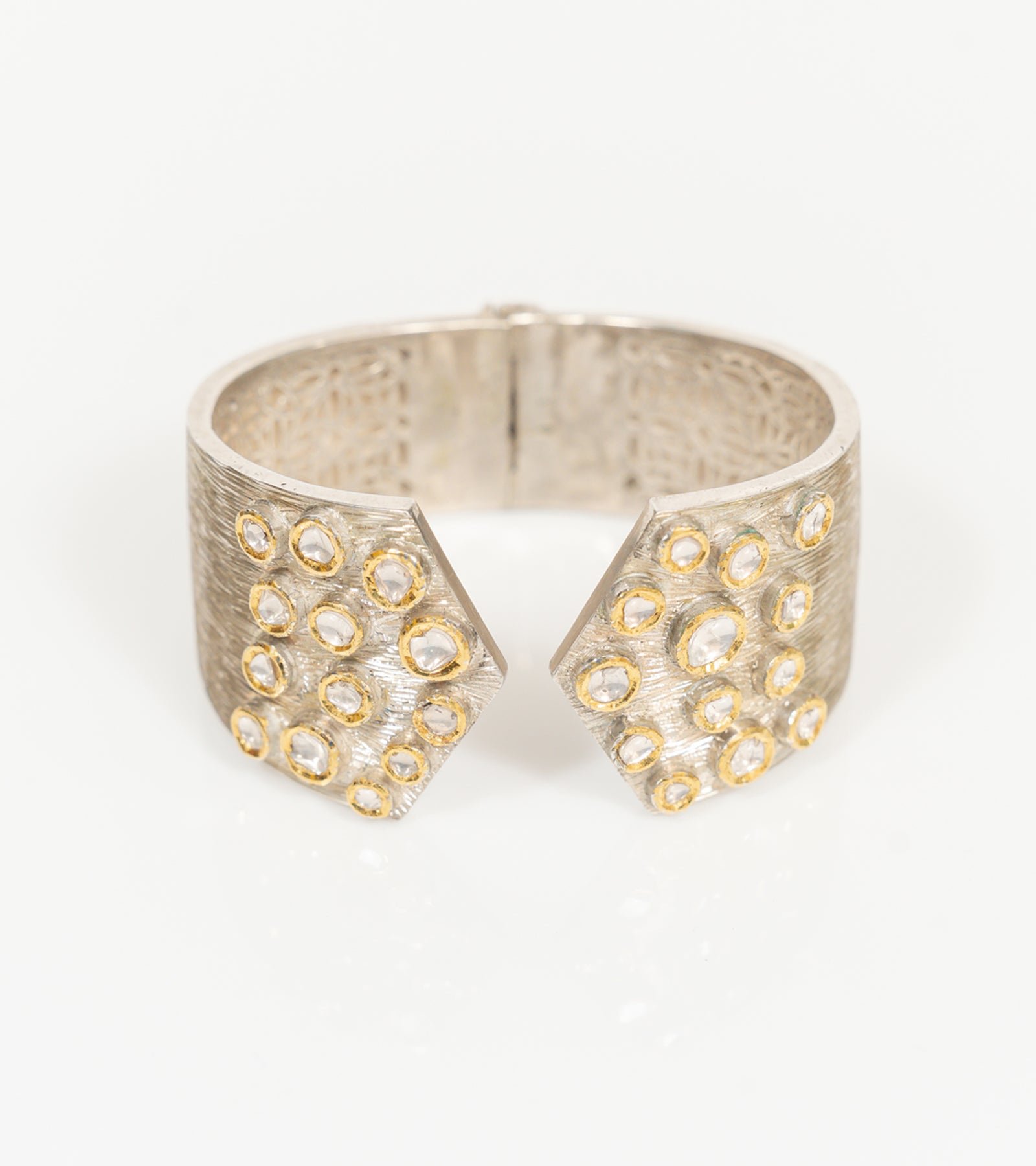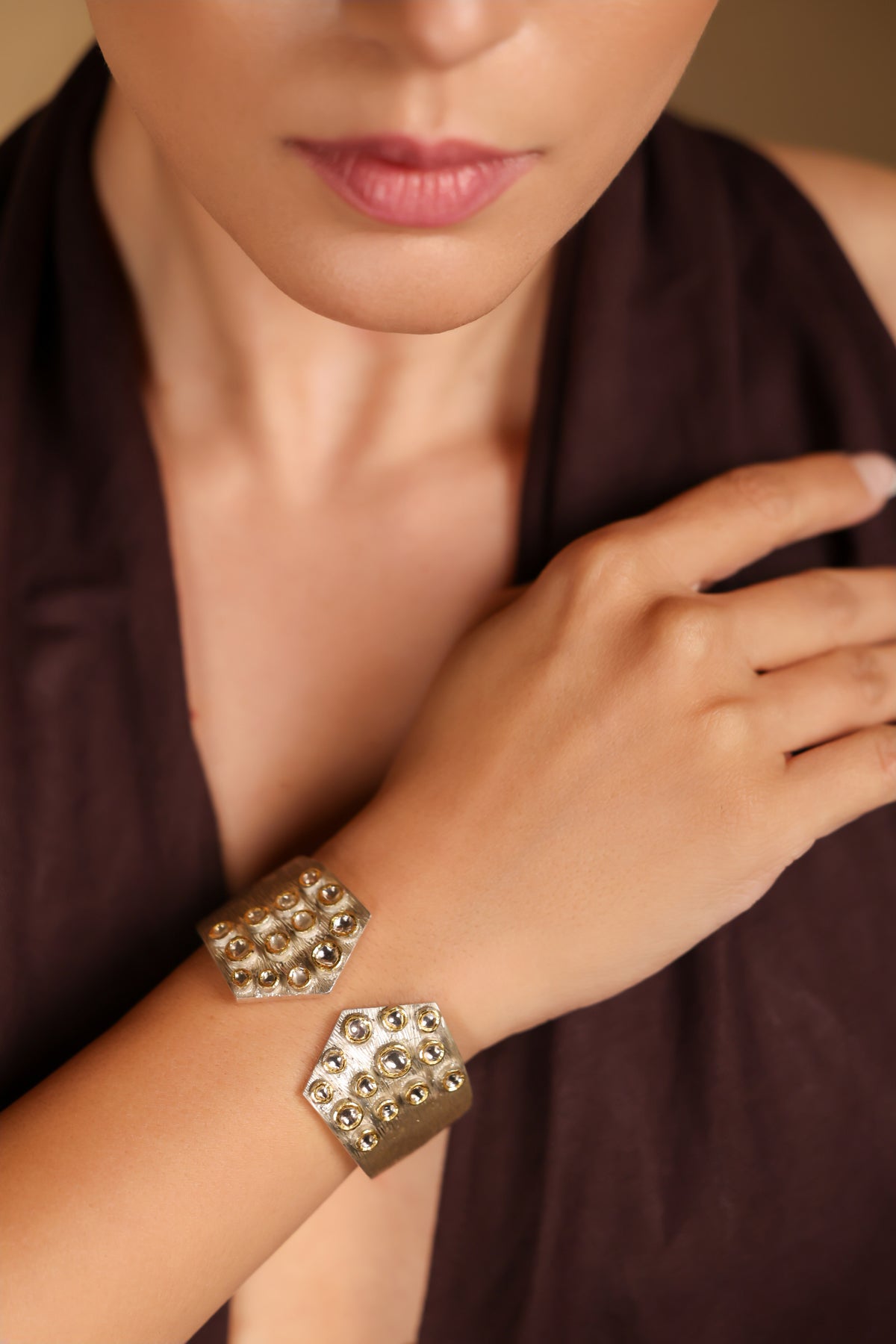
At first glance, Polki can look uniform — the same warm gold, the same milky, uncut stones, a silhouette you feel you've seen before. It's an easy craft to underestimate from a distance.
Get close, and that impression falls apart completely. No two uncut diamonds are the same shape. No two hand-set pieces come out identical, even from the same karigar's hands. Every UNCUT Festive piece carries small irregularities that aren't flaws to correct — they're the actual signature of the craft, proof that a person, not a machine, made the decision to set that particular stone in that particular place.
That's the character most people never notice, because they've been taught to look at Polki as a category, not an object. Look closer and it stops being generic — a UNCUT Exclusive commission reveals it most dramatically, but even the simplest UBAA piece carries that same insistence: nothing here was mass-produced into sameness. It was made, by hand, with all the small imperfections that make it unmistakably itself.